SAMEE Group is committed to providing a safe, healthy, and supportive work environment for all employees. SAMEE Group views occupational safety and employee well-being not merely as regulatory requirements but as foundational elements of operational integrity and workforce sustainability. The Group’s approach to health and safety balances strict regulatory adherence with proactive risk management, aiming to foster a workplace culture where safety awareness, accountability, and continuous improvement are deeply embedded in daily operations across all locations. This philosophy is reflected in policies and practices that go beyond compliance to create a safe, resilient, and supportive working environment.
The Group’s health and safety strategy is anchored on five key principles: full compliance with Malaysia’s Occupational Safety and Health Act and applicable safety legislation in Singapore and Thailand; group-wide adoption of standardised EHS procedures supported by regular audits; annual review and refinement of Hazard Identification, Risk Assessment, and Risk Control (“HIRARC”) documentation and Job Safety Analyses (“JSA”) to reflect evolving operational risks; development of competent internal safety committees and EHS officers to manage site-level implementation; and continuous improvement of leading safety indicators, such as near-miss reporting and safety engagement scores, to proactively address hazards before they manifest into incidents. This strategic framework is periodically reviewed by the Risk and Sustainability Committee and updated in response to shifting regulatory landscapes and emerging site-specific risks.
In FY2025, SAMEE Group reaffirmed its commitment to proactive health and safety management through a series of targeted initiatives. Risk profiles and HIRARC documentation were updated across all operational sites in Malaysia, Singapore, and Thailand to reflect current work conditions and emerging hazards. A culture of safety participation was actively promoted, encouraging employees to report near misses, unsafe conditions, and ergonomic concerns. These reports were formally integrated into the Group’s risk registers, enabling timely corrective actions and process improvements.
To extend the scope of health support, SAMEE Group maintained access to panel clinics, conducted regular health screenings, and offered voluntary medical surveillance by qualified occupational health professionals. These efforts were complemented by routine fire drills, evacuation exercises, and internal safety inspections conducted by cross-functional teams to reinforce preparedness and emergency response capabilities.
Through these integrated efforts, SAMEE Group continues to strengthen its safety culture, ensuring that every employee operates within a secure and health-conscious environment that supports long-term well-being and operational excellence.
SAMEE Group remains firmly committed to protecting the health and well-being of all employees and contractors as part of our broader EESG strategy. To this end, we have implemented a formal Occupational Health and Safety Management System (“OHSMS”) that is guided by legal requirements, recognised standards, and best practices such as ISO 45001 and the Occupational Safety and Health Act (“OSHA”). This system is further strengthened by our internal Environmental Health and Safety (“EHS”) procedures, providing a cohesive framework that applies across all operational sites in Malaysia, Singapore, and Thailand.
The OHSMS outlines clearly defined roles and responsibilities at all organisational levels and facilitates the proactive identification, evaluation, and mitigation of workplace hazards. By embedding safety into the operational fabric of our business, we aim to enhance regulatory compliance, reduce risk exposure, and foster stakeholder trust.
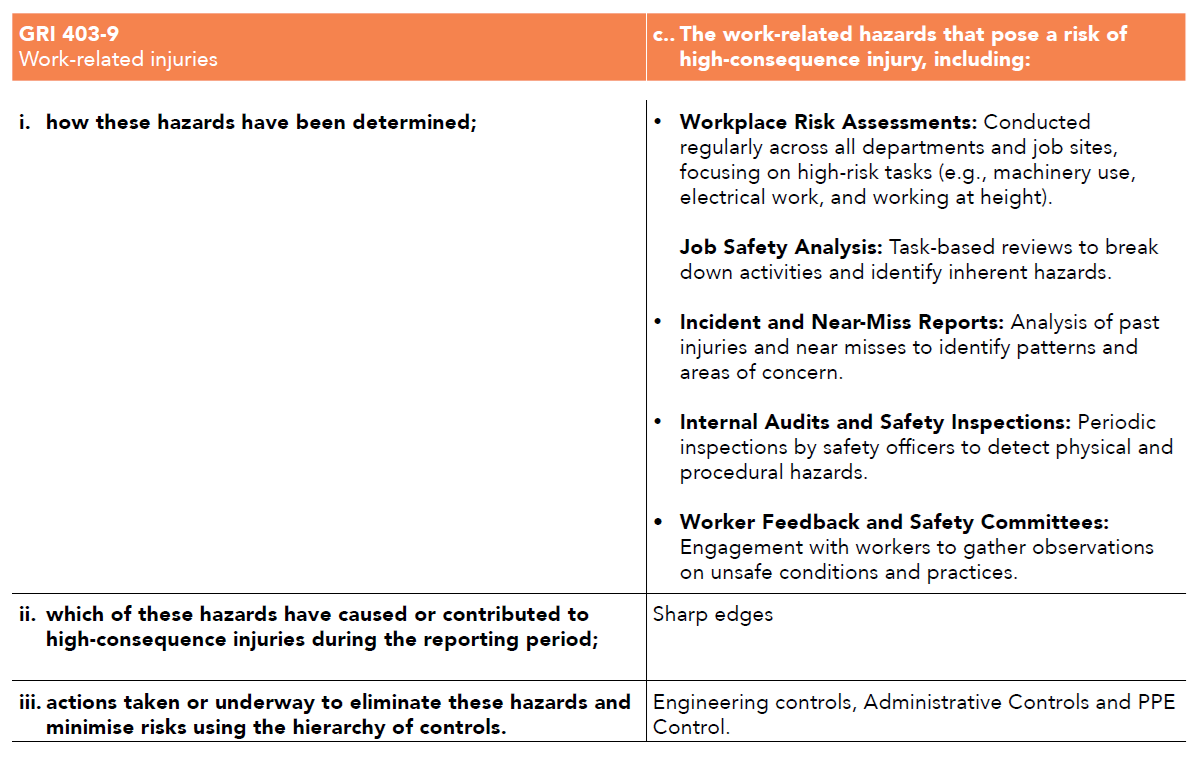
Our occupational risk management is guided by the HIRARC framework, alongside internationally recognised best practices. Trained and competent personnel conduct structured risk assessments, prioritising hazards based on potential impact. Control measures are implemented in accordance with the hierarchy of controls, from elimination to PPE, and are reviewed periodically by site-level EHS officers and Committees.
All employees are empowered to report hazards through confidential channels, with full protection under our zero-reprisal policy. Any act of retaliation is subject to disciplinary action. Furthermore, employees have the right to withdraw from tasks they reasonably believe pose a safety threat. In such cases, the affected area is immediately secured, and follow-up actions are taken before work resumes.
Where incidents, such as near misses, injuries, or occupational illnesses, do occur, SAMEE Group follows a structured investigation protocol. Cross-functional teams including EHS personnel and relevant supervisors conduct a root cause analysis using the fishbone method, examining factors across six domains: measurement, material, method, manpower, environment, and management. Findings are used to develop corrective and preventive actions (“CAPA”), which are tracked to closure and shared across operational sites to support continuous improvement.
SAMEE Group actively cultivates a safety-first culture by embedding robust mechanisms for worker consultation and participation in our OHS processes. Employees are formally represented through Joint Health and Safety Committees (“JHSCs”), EHS Committees (“EHSCs”), and OSHE meetings.
Employee input plays a central role in shaping our safety practices, from participating in hazard assessments and developing Safe Work Procedures (“SWPs”) and Emergency Response Plans to contributing insights during Gemba Walks, incident reviews, and post-audit feedback sessions. Regular communication through bulletins, posters, and toolbox briefings reinforces safety awareness at all levels.
Beyond physical safety, SAMEE Group adopts a holistic approach to workforce well-being. On-site support includes first aid stations, departmental medical kits, and designated rest areas. For broader care needs, employees are referred to a network of affiliated healthcare providers for general check-ups, minor treatments, and specialist referrals.
We also run preventive health and wellness programmes such as annual health screenings, nutrition counselling, and lifestyle management initiatives. Specialised screenings are offered to employees aged 35 and above to address agerelated risks. Regular workshops covering chronic disease prevention, mental health, and stress management are conducted to encourage health ownership and resilience.
SAMEE Group extends its safety standards to external stakeholders, including contractors, suppliers, and service providers, as part of our zero-tolerance approach to safety breaches. We conduct workplace evaluations for hazardous tasks such as chemical handling, machinery operation, and welding, enforcing appropriate risk controls including PPE use and Job Safety Analyses.
Health and safety impacts across the product and service lifecycle, from design and testing to deployment, are also assessed. Where needed, design modifications are introduced to reduce exposure risks. All third-party partners are subject to due diligence reviews. Non-compliance is addressed through corrective actions or disengagement, ensuring that our business relationships uphold the same high standards as our internal operations.
In FY2025, SAMEE Group maintained a proactive safety stance through structured risk controls, regular internal audits, and responsive incident reporting. All cases of work-related injuries and ill health were recorded and investigated in line with the Occupational Safety and Health (Amendment) Act 2022, with learnings used to inform preventive actions. Recognising that well-being extends beyond physical safety, SAMEE Group introduced several holistic health initiatives aimed at improving both physical and mental resilience. These included fatigue management protocols, ergonomic risk assessments, BMIfocused wellness challenges, and daily step-tracking campaigns to promote active lifestyles. The Group also continued to collaborate with certified EHS trainers to deliver advanced safety training modules, such as First Aid, Fire Safety, and Hazardous Materials Handling, ensuring technical competence among frontline staff and supervisors.
We track performance using internationally recognised indicators, including the Lost Time Incident Rate (“LTIR”) based on 200,000 hours worked. This data is reviewed regularly by the Risk and Sustainability Committee to shape strategic safety initiatives.
Complementing our prevention efforts, we promote workforce vitality through recreational wellness programmes, including futsal, football, badminton, table tennis, and weekly health activities. These initiatives foster a supportive, stress-aware work environment and contribute to our goal of achieving a zero-harm culture.
Performance data is reviewed regularly by the Risk and Sustainability Committee and used to inform strategic safety initiatives, reinforcing the Group’s commitment to a zero-harm culture. For detailed, year-on-year OHS performance data and incident rate calculations, please refer to the accompanying tables.
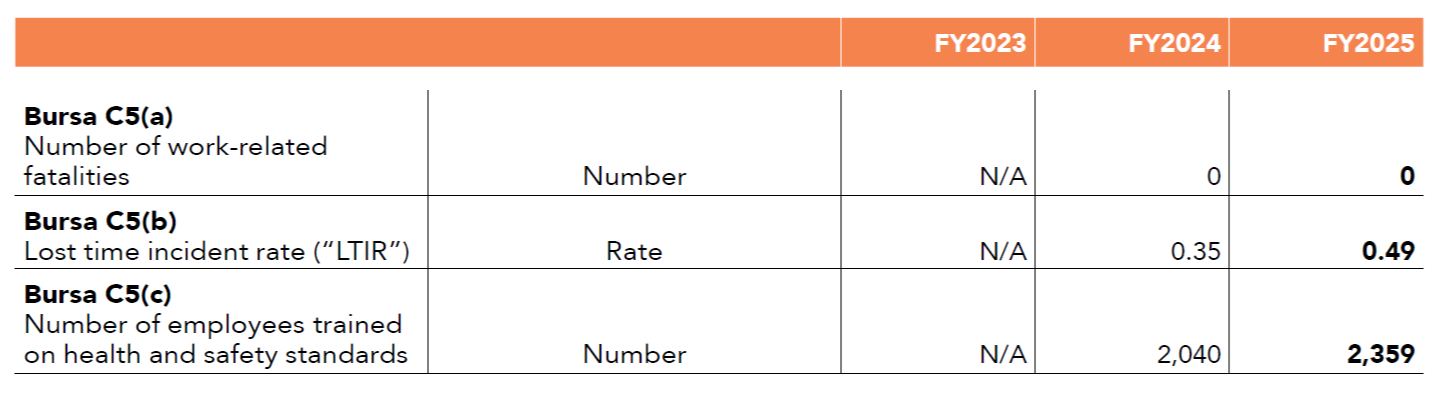
All reported incidents were investigated and addressed using SAMEE Group’s internal EHS protocols, including root cause analysis, corrective actions, and review by safety committees. These findings continue to inform our continuous improvement programs aimed at eliminating hazards and promoting a safer, healthier work environment. The detailed breakdown of common safety metrics is provided in the table below.
We hold the belief that every employee bears responsibility for fostering a workplace culture that prioritises safety. New hires are given an overview of our safety policies and culture and this same approach is extended to our contractors during their annual EHS awareness training.
We have also created an emergency response team (“ERT”) that is responsible for preparing for and managing any emergencies that may occur on-site. These team members undergo mandatory training to attain competency certification, which equips them to handle any incidents that may arise. In addition to this training, we provide them with information on how to report accidents and medical incidents, which complements their overall preparedness. All employees working for SAMEE are provided with coverage under the Environmental Health and Safety (“EHS”) programme, ensuring that each individual is fully protected and supported by this comprehensive initiative.
We closely monitor the Lost Time Injury Rate (LTIR) as a key safety performance indicator. Our LTIR data encompasses 100% of our staff across all operating sites in Malaysia, Singapore, and Thailand, ensuring transparency and consistency in our safety performance disclosure. In FY2024, our LTIR was 0.35, and in FY2025 it stood at 0.49. While this reflects a slight increase, we view it as an opportunity to further strengthen our safety programmes, enhance incident prevention measures, and reinforce our goal of achieving zero accidents.
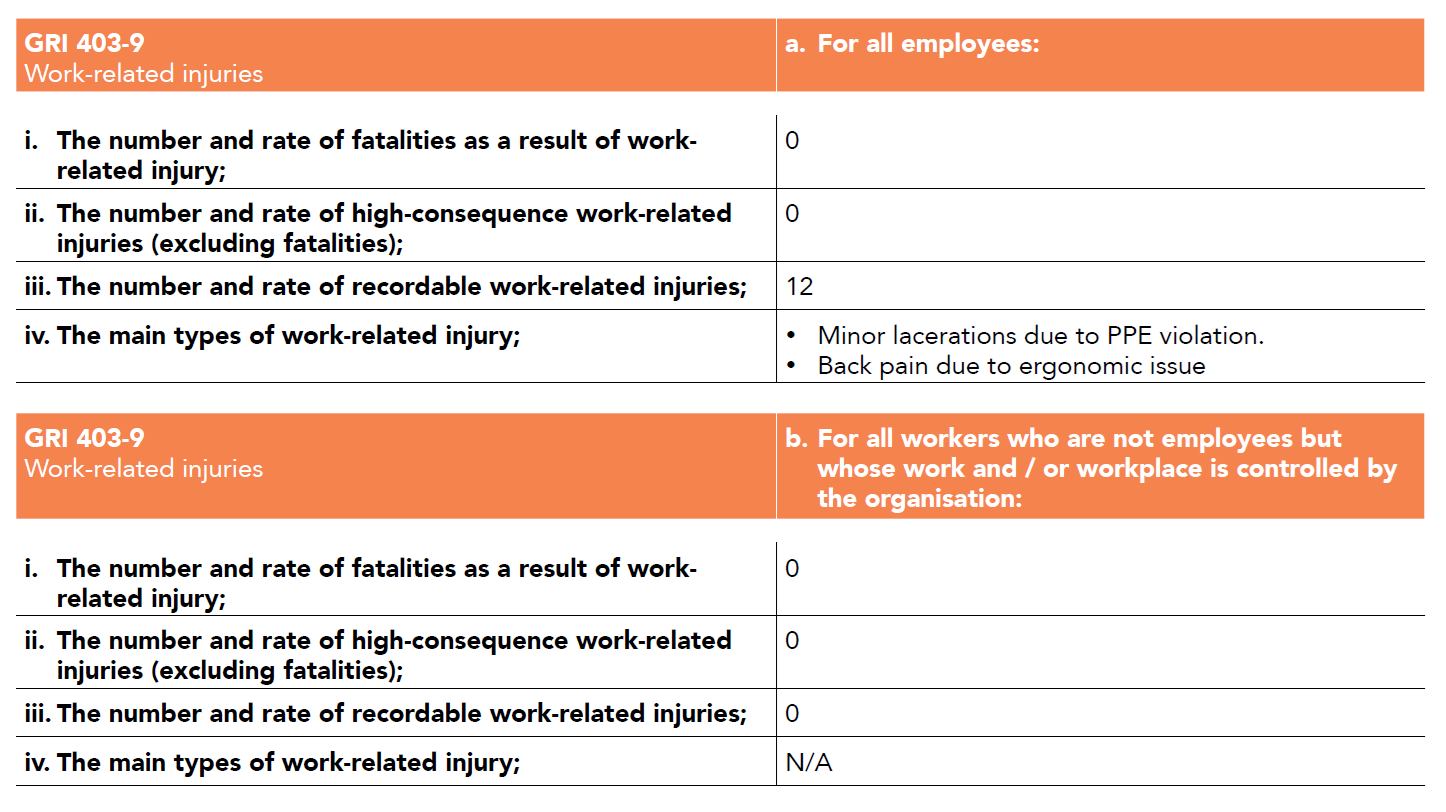
All reported health and safety incidents are subject to a structured investigation process, which includes root cause analysis and corrective action planning. In FY2025, a total of 12 recordable work-related injuries were reported, consisting primarily of minor lacerations from PPE violations and back pain due to ergonomic issues. Each case was investigated, and corrective measures were implemented to prevent recurrence.
As part of continuous improvement, a wide range of safety training programmes were conducted, including:
• First Aid and CPR
• Overhead Crane Train-The-Trainer
• Hearing Conservation Training
• Forklift Safety & Maintenance
• Occupational Safety & Health Administration (OSHA)
• OSH Coordinator Trained Person Programme
• Professional in Scheduled Waste Management
• Fire Prevention Awareness Programme
• Hazard Identification, Risk Assessment and Risk Control (HIRARC)
As part of our due diligence, we conduct comprehensive health and safety risk assessments for all potential new operations and projects through the HIRARC process. The same HIRARC methodology is applied to all existing operations to identify, evaluate and control potential hazards. By systematically managing risks and implementing preventive measures, we ensure compliance with Malaysian occupational safety regulations and maintain a safe, healthy working environment for all employees and contractors.