Effective waste and hazardous materials management is essential for ensuring regulatory compliance, protecting human health, and minimising environmental impact.
SAMEE Group adopts a disciplined, compliance-driven approach to waste and hazardous materials management, ensuring that all practices align with regulatory requirements across its operations in Malaysia, Singapore, and Thailand. Operational teams implement site-specific waste protocols tailored to local legal frameworks, with a strong emphasis on source segregation, the controlled handling of scheduled waste, and secure disposal through licensed contractors. By prioritising strict oversight and proactive risk mitigation, the Group aims to uphold environmental integrity and reduce waste-related impact across the value chain.
Waste management performance is continuously monitored across all key operational sites, with periodic audits conducted to validate documentation accuracy, container condition, and employee compliance. The Group’s strategy not only focuses on regulatory conformance but also seeks to minimise waste generation through process optimisation, resource recovery, and widespread employee engagement. This multi-layered approach integrates environmental stewardship into the daily operations of every facility.
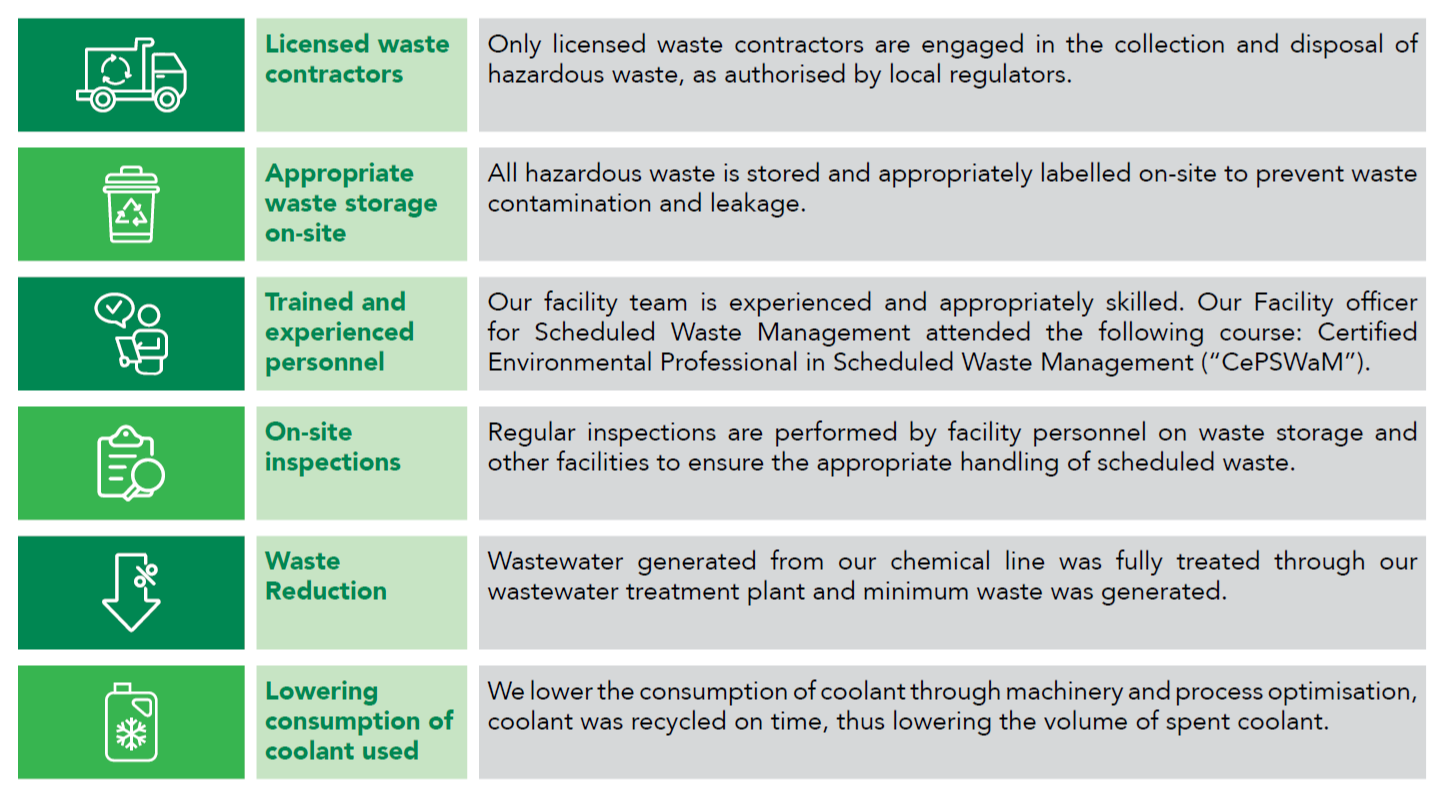
SAMEE Group’s waste strategy is anchored on several core pillars. These include enhancing segregation and source reduction through frontline system upgrades and process redesign; maintaining strict compliance in the handling of hazardous and scheduled waste with full traceability of transport and disposal; promoting recycling and resource efficiency in collaboration with certified recovery partners; and cultivating a strong internal culture of environmental accountability through training and behavioural change programmes. The strategy also addresses supply chain alignment, encouraging packaging reduction and responsible waste management practices among vendors and subcontractors. Additionally, targeted process improvements, such as optimising machinery to reduce coolant consumption and recycling coolant in a timely manner, have resulted in a measurable decline in spent coolant volumes.
In FY2025, SAMEE Group expanded the scope and effectiveness of its waste and hazardous materials management through a combination of operational controls, digital tracking tools, and staff empowerment. Colour-coded bins, improved signage, and standardised collection schedules were rolled out across production and administrative areas to increase waste sorting accuracy and recycling rates. Employees received annual training on hazardous materials handling, labelling protocols, and updated classification systems in line with local environmental legislation and Certified Environmental Professional in Scheduled Waste Management (“CePSWaM”) guidelines. All hazardous waste continued to be managed by fully licensed contractors registered with the relevant environmental authorities, ensuring full legal compliance and traceability from onsite storage to final treatment.
To support circular economy goals, the Group is also strengthening various employee-driven initiatives. These included cooking oil recycling, food waste composting, paper reduction efforts, and the installation of water dispensers to eliminate single-use bottles. Reusable containers were distributed in high traffic zones to encourage sustainable habits, complemented by awareness campaigns such as Say No to Plastic, SAM Recycle Week, and Planting for a Sustainable Future, the latter of which included the distribution of potted plants and the promotion of native landscaping.
Externally, SAMEE Group expanded its environmental stewardship through volunteer activities such as beach clean-ups, mangrove replanting, tree planting and community-based plogging events. These initiatives reflect the Group’s commitment to embedding compliance, efficiency, and sustainability into the core of its waste management practices while fostering a broader culture of environmental responsibility across and beyond its operations.
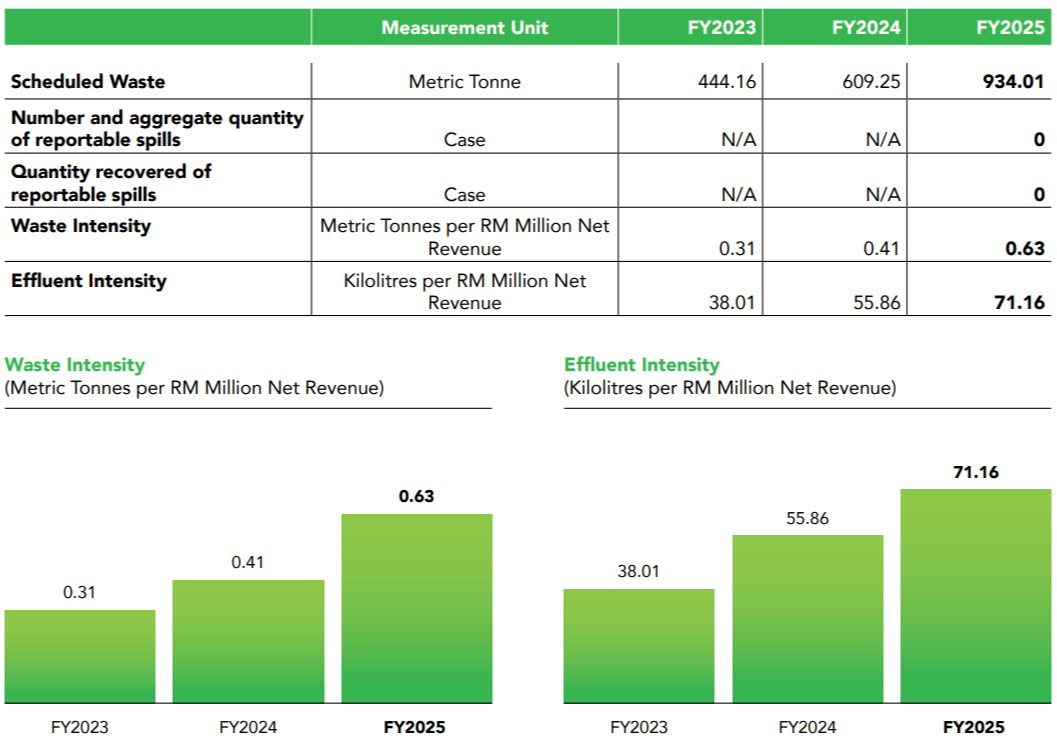
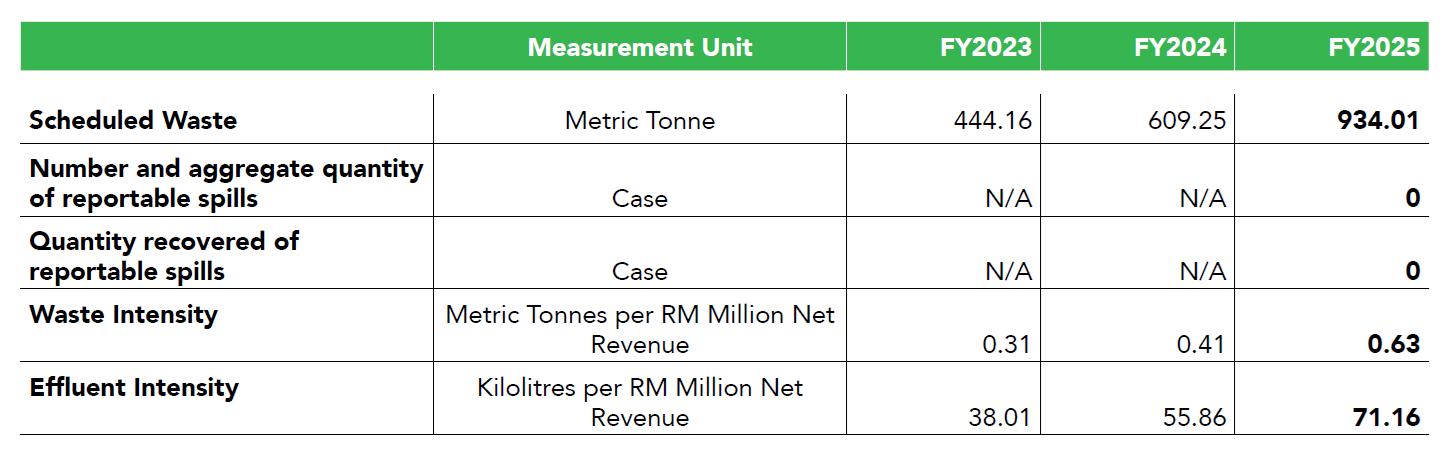
In FY2025, SAMEE Group continued to strengthen its environmental data governance by systematically monitoring waste, effluent, and spill metrics across its operations in Malaysia, Singapore, and Thailand. This structured approach enhances traceability, enables regional benchmarking, and supports continuous improvement in environmental performance management. The following table summarises key waste-related data for the reporting year:
All hazardous waste was handled by certified third-party providers in accordance with regulatory requirements. Recyclable materials were recovered where feasible, demonstrating our ongoing commitment to reduce landfill dependency and maximise material recovery. Expanded zirconium lines also continued to reduce reliance on zinc-based materials, cutting both hazardous waste and energy use.
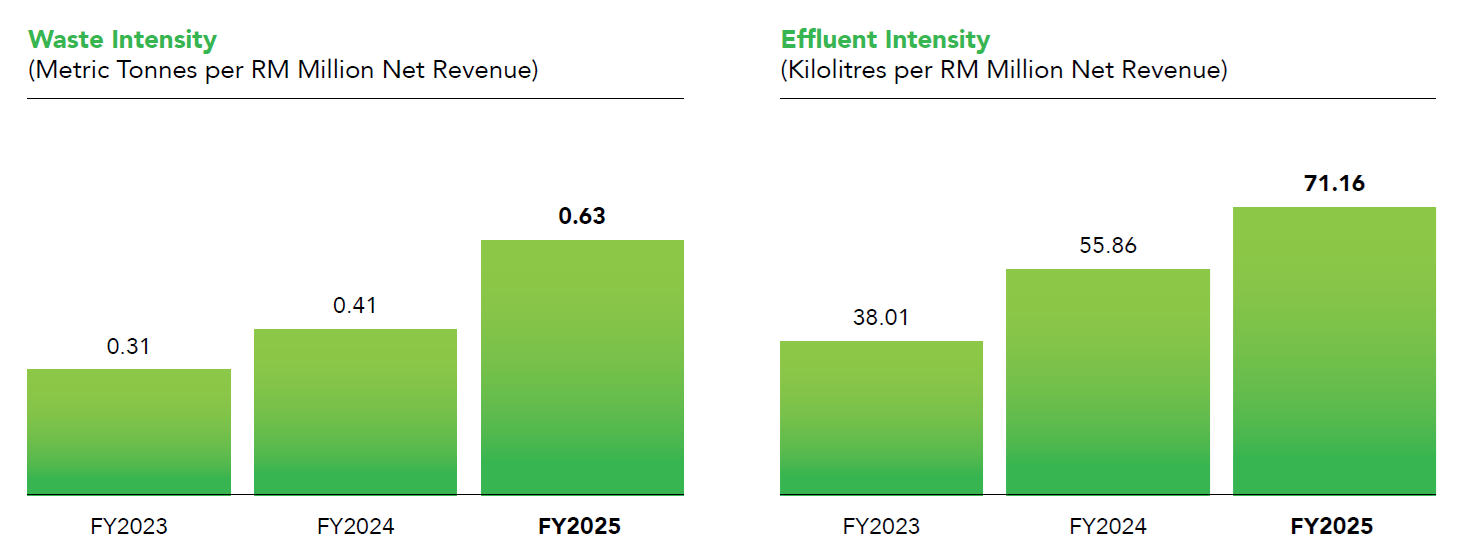
In FY2025, the total scheduled waste generated increased to 934.01 metric tonnes, compared to 609.25 metric tonnes in FY2024 and 444.16 metric tonnes in FY2023.
As for effluent discharge, over the past three financial years, our total effluent discharge amounted to 60,185 kilolitres in FY2023, 82,896 kilolitres in FY2024, and 105,359 kilolitres in FY2025. The company has consistently complied with all effluent discharge standards set by Malaysia’s Department of Environment (DOE). All wastewater is treated to tertiary level before being safely discharged into the municipal drainage system. Regular monitoring and testing are carried out to ensure the quality of discharged water meets regulatory requirements and supports our commitment to environmental protection.
Our effluent intensity increased from 38.01 kilolitres per RM million net revenue in FY2023 to 71.16 kilolitres per RM million net revenue in FY2025, reflecting operational expansion. We continue to identify water efficiency opportunities and upgrade our treatment facilities to further improve performance.